
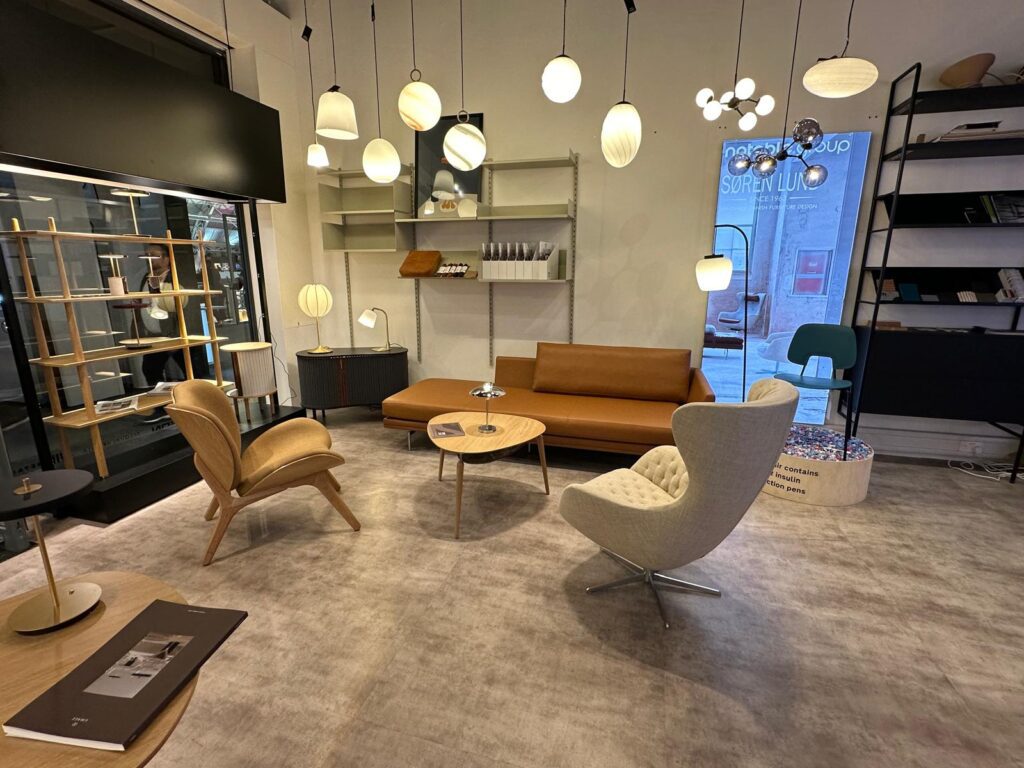
The lighting industry is evolving fast. From smart controls to circular economy models, UK interior projects in 2025 demand more than just beautiful fixtures; they need performance, flexibility, and future-readiness. In this article, we explore the top trends lighting distributors and specifiers should watch, and how Notable is staying ahead of the curve.
1. Smart & IoT Lighting Integration
-
Increasing adoption of connected lighting systems, sensors, and automation
-
Lighting integrated with HVAC, BMS (Building Management Systems), and presence detection
-
Benefits: energy savings, responsive environments, data-led maintenance
Notable edge: We work with brands that support smart control protocols and integrate with specification tools, and help specifiers choose compatible systems.
2. Circular Economy & Lighting-as-a-Service
-
Shift from “buying products” to leasing or service models
-
Brands offering repair, upgrade, or take-back schemes
-
Encourages longevity and reduces waste
Notable perspective: We partner with brands open to modularity, retrofits, and circular offerings, helping clients adapt procurement strategies accordingly.
3. Focus on Human-Centric Lighting (HCL)
-
Lighting designed around human circadian rhythms: daylight-matching colour temperature shifts
-
Improving occupant wellbeing, especially in residential, hospitality, and workplace settings
-
Overlaps with wellness certifications
Notable’s role: We offer brands with tunable CCT and control systems that support HCL functionality. We can advise on specification and compliance.
4. Off-the-Shelf vs Customised Solutions
-
Clients now want both quick-ship and bespoke lighting
-
Demand for modular systems and adaptable designs
-
Custom finishes, tailored luminaire lengths, and alternative materials
Notable approach: Our catalogue includes both stocked lines (fast delivery from UK warehouse) and bespoke orders. Our in-house workshop can help with bespoke modifications.
5. Sustainability as Non-Negotiable
-
Efficient LED, recyclable materials, and transparent supply chains
-
Certification demands and client pressure make sustainability a baseline, not an add-on
-
Energy cost inflation pushes clients toward efficient solutions
Notable commitment: Sustainability is at our core. Every brand in our portfolio meets design and environmental sensibilities.
6. Enhanced Technical & Specification Support
-
Architects and specifiers expect CAD/BIM resources, photometric data, and installation guidance
-
Distributors are evolving into technical partners, not just sellers
Notable’s advantage: We provide data, guidance, and collaboration with architects so the lighting is not just beautiful but technically robust.
FAQs
What’s “lighting as a service”?
A procurement model where clients lease lighting rather than purchase it, with maintenance, upgrades, and recycling built into the service.
Can smart lighting really reduce costs?
Yes, smart systems can adjust usage in real time (e.g. dimming, occupancy sensors), often reducing energy consumption by 20–40%.
Are bespoke lighting solutions practical for tight schedules?
Yes, when handled by experienced distributors. By combining stock items and custom modules, tight projects can still specify unique designs.
Is human-centric lighting just a trend?
No, growing research supports its benefits on wellbeing, sleep, and productivity. It’s increasingly demanded by premium and wellness-focused clients.
Conclusion
Lighting trends in 2025 prioritise intelligence, sustainability, and human well-being. As a trusted UK distributor, Notable is uniquely positioned to help designers and specifiers stay ahead, providing curated brands, technical support, and flexible solutions.
👉 Planning your next lighting or interior project? Let’s talk – book a consultation with Notable to align your specs with tomorrow’s trends.